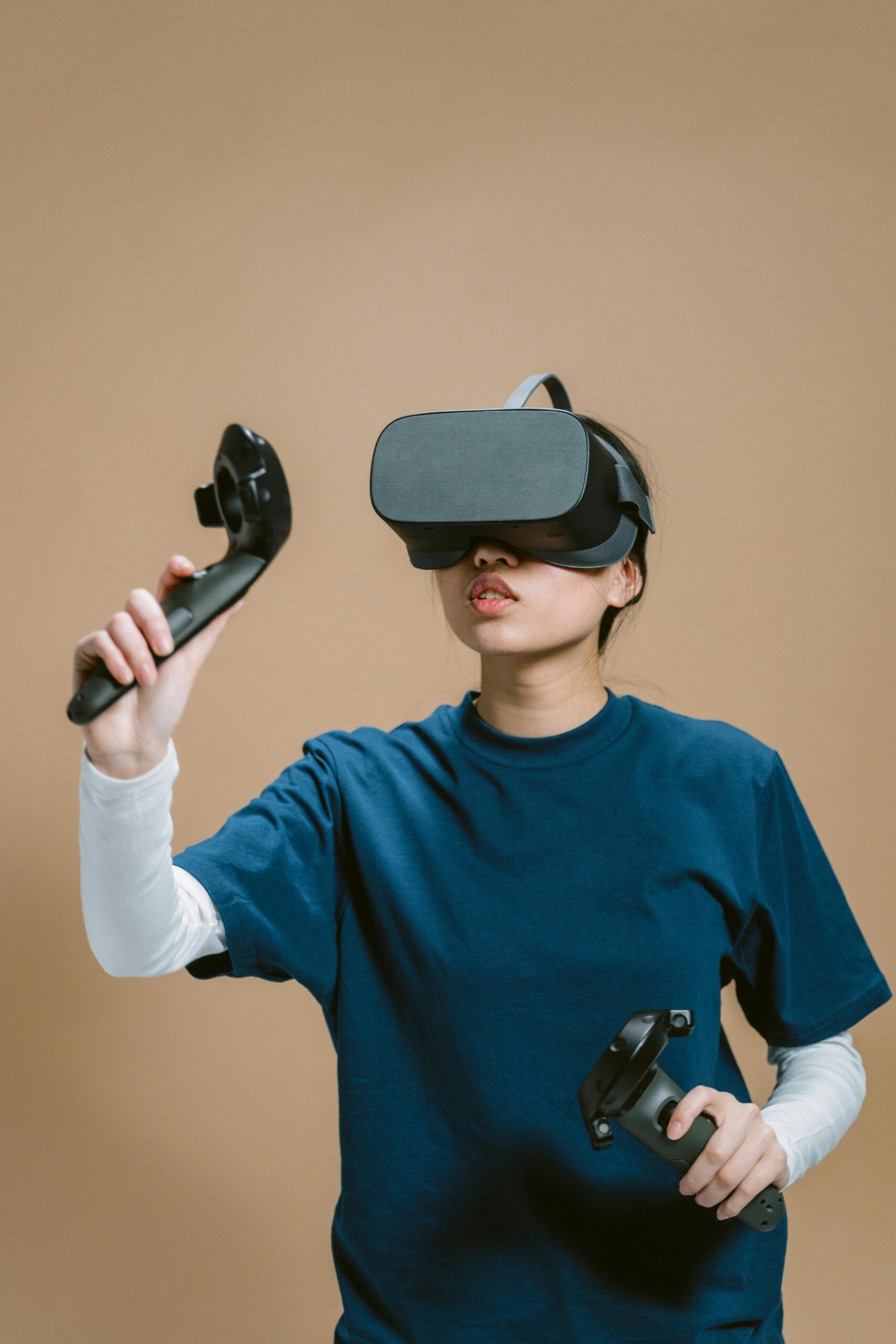
Introduction
Imagine stepping into a world where the boundaries of physical reality dissolve — where you can walk on Mars, explore ancient civilizations, perform complex surgeries, or train for high-risk missions without leaving your room. This is the transformative power of Virtual Reality (VR).
VR is no longer just science fiction. It has become a powerful technology reshaping industries such as gaming, education, healthcare, entertainment, tourism, and workplace training. As headsets become lighter, graphics become more realistic, and AI increasingly blends with VR environments, the line between the digital and physical worlds continues to blur.
This article explores what VR is, how it works, its evolution, key components, applications, benefits, limitations, future trends, and the enormous impact it promises in the coming decades.
What is Virtual Reality?
Virtual Reality (VR) is a computer-generated simulation of a three-dimensional environment that users can interact with in a seemingly real or physical way using electronic devices such as headsets or motion controllers.
The goal of VR is to create a sense of immersion, where the user feels “present” inside the virtual world rather than just observing it through a screen.
VR experiences typically involve:
- Visual immersion (3D graphics and stereoscopic displays)
- Auditory immersion (spatial or 3D sound)
- Motion tracking (head, hand, and body movement)
- Haptic feedback (vibrations or tactile sensations)
Together, these elements simulate a realistic or imaginative environment that responds dynamically to user actions.
A Brief History of Virtual Reality
1. Early Concepts (1950s–1970s)
- In 1956, filmmaker Morton Heilig built the Sensorama, one of the first immersive machines combining visuals, vibrations, and scents.
- In 1968, Ivan Sutherland created the first head-mounted display (HMD), known as the Sword of Damocles, considered the earliest true VR system.
2. Growth and Experimentation (1980s–1990s)
- Jaron Lanier, founder of VPL Research, coined the term Virtual Reality.
- Early VR gloves, goggles, and training simulators were introduced.
- Nintendo’s Virtual Boy attempted consumer VR but failed due to limited technology.
3. Modern VR Revolution (2012–Present)
The turning point came in 2012 with the launch of Oculus Rift.
This began a new wave of innovation, leading to:
- HTC Vive
- PlayStation VR
- Meta Quest
- Valve Index
Today, VR technology is faster, lighter, more affordable, and far more immersive — paving the way for mass adoption.
How Virtual Reality Works
VR systems rely on a combination of hardware and software to create an immersive experience. Here are the essential components:
1. VR Headsets (HMDs)
Headsets display separate images to each eye, creating a stereoscopic 3D effect. Built-in sensors track head position and movement, adjusting the view accordingly.
2. Motion Tracking
Tracking systems detect:
- Head movement
- Hand movement
- Full-body motion
Technologies used include:
- Infrared cameras
- Gyroscopes
- Accelerometers
- LIDAR sensors
This tracking enables real-time interaction with the virtual environment.
3. Controllers and Haptic Devices
Hand controllers, gloves, or suits offer tactile feedback. Vibrations or pressure simulate touch, enhancing immersion.
4. Audio Systems
Spatial audio makes sounds come from specific directions in the virtual environment — improving realism and user orientation.
5. Software and Rendering Engines
VR worlds are created using powerful engines such as:
- Unreal Engine
- Unity
- CryEngine
These engines render 3D graphics, simulate physics, and integrate AI elements.
Types of Virtual Reality
VR is not one-size-fits-all. There are several forms based on the level of immersion:
1. Non-Immersive VR
Involves interacting with a computer screen but not fully entering a virtual world.
Example: Video games like The Sims or 3D simulation software.
2. Semi-Immersive VR
Offers partial immersion, usually through large screens or projection systems.
Example: Flight simulators used for pilot training.
3. Fully Immersive VR
Provides the highest level of realism with headsets, motion tracking, and haptics.
Example: Oculus Quest, HTC Vive, Valve Index.
4. Web-Based VR (WebVR/WebXR)
Runs directly in web browsers without additional software.
5. Collaborative or Social VR
Enables multiple users to meet and interact in shared virtual environments, often used in remote work.
Applications of Virtual Reality
VR has expanded far beyond gaming. Today, it plays a major role across diverse industries:
1. Gaming and Entertainment
The gaming industry was the first major adopter of VR.
- Immersive first-person experiences
- Realistic simulations
- Multiplayer social VR games
- Virtual theme parks and theaters
Platforms like Meta Quest and SteamVR offer thousands of VR titles.
2. Education and Training
VR provides safe, hands-on learning environments.
- Virtual science labs
- Interactive history tours
- Language learning through immersive dialogue
- Teacher training simulations
Students can explore complex concepts in ways textbooks can’t match.
3. Healthcare and Medicine
Medical professionals use VR for:
- Surgical training and planning
- Pain management therapy
- Exposure therapy for phobias and PTSD
- Physical rehabilitation
VR-based therapy improves patient outcomes and reduces recovery time.
4. Corporate and Industrial Training
VR allows workers to practice dangerous or complex tasks without risk.
- Firefighter training
- Military simulations
- Manufacturing workflow training
- Construction site safety programs
VR reduces training costs and improves skill retention.
5. Architecture and Real Estate
Virtual tours allow buyers or clients to walk through buildings before they exist.
- 3D walkthroughs
- Virtual staging
- Architectural visualization
This helps designers catch issues early and improves client communication.
6. Tourism
VR offers immersive travel experiences that allow users to explore:
- Historical landmarks
- Natural wonders
- World cities
Hotels and travel companies use VR previews to enhance bookings.
7. Retail and E-Commerce
VR shopping lets customers:
- Try products virtually
- Walk through virtual stores
- Customize items in 3D
This enhances engagement and drives sales.
8. Fitness and Sports
VR-based fitness apps provide fun, interactive workouts.
Athletes use VR for:
- Strategy planning
- Performance analysis
- Simulated training
VR sports analytics are becoming a major part of coaching strategies.
Advantages of Virtual Reality
1. Immersive Learning and Training
VR enables experiential learning, which improves memory and skill acquisition.
2. Safety
Dangerous tasks can be practiced risk-free in simulated environments.
3. Better Engagement
VR content captures attention far more effectively than traditional media.
4. Cost Savings
Simulators and VR training can reduce expenses associated with physical equipment or travel.
5. Enhanced Creativity
Artists, designers, and engineers use VR to visualize concepts in 3D before making real-world decisions.
6. Accessibility
VR allows people to explore places or experiences they otherwise couldn’t,due to mobility, distance, or financial limitations.
Challenges and Limitations of Virtual Reality
Despite significant progress, VR faces several ongoing challenges:
1. High Costs
High-quality VR systems can be expensive, although prices are decreasing.
2. Motion Sickness
Some users experience nausea due to delayed or imprecise motion tracking.
3. Limited Content
Although growing, the VR content ecosystem is still smaller than traditional media.
4. Physical Space Requirements
VR often requires a clear area for movement, limiting usability in small spaces.
5. Technical Limitations
Even the best VR systems struggle with:
- Pixelation (screen door effect)
- Limited field-of-view
- Heavy headsets that cause discomfort
6. Privacy and Security Concerns
VR systems collect detailed biometric data, leading to concerns about misuse or unauthorized access.
VR and the Metaverse
One of the biggest catalysts for VR’s growth is the concept of the Metaverse — a persistent, shared virtual universe where people can work, play, socialize, and shop.
Companies like Meta, Microsoft, Google, and Apple are investing heavily in:
- Virtual workplaces
- 3D communication platforms
- Social VR
- Mixed reality experiences
VR will be at the core of Metaverse environments, enabling deeper, more natural digital interactions.
The Future of Virtual Reality
VR is evolving rapidly, and the future holds enormous promise. Key trends include:
1. Lighter and More Comfortable Headsets
Advances in optics and materials will lead to glasses-sized VR devices.
2. Higher-Resolution Displays
8K VR and foveated rendering will deliver ultra-realistic visuals.
3. Full-Body Tracking and Haptics
Haptic suits and gloves will allow users to feel textures, impacts, and temperature.
4. AI-Driven VR
AI will enhance:
- Realistic characters
- Smarter environments
- Personalized virtual worlds
5. Mixed Reality (MR) Integration
Combining VR with AR will allow seamless blending of digital and physical worlds.
6. Virtual Workplaces and Remote Collaboration
VR offices will transform remote work with:
- Virtual desks
- 3D data visualization
- Immersive meetings
7. Medical VR Breakthroughs
Future applications may include:
- VR surgeries performed remotely
- Mental health therapy
- Neuroscience research
8. Social and Cultural Expansion
Virtual museums, concerts, and classrooms will become mainstream.
Conclusion
Virtual Reality stands at the forefront of digital transformation. What began as an experimental technology has evolved into a powerful tool reshaping how we learn, work, play, heal, and communicate. VR offers limitless possibilities — from immersive education and revolutionary medical procedures to entertainment experiences that defy imagination.
Yet challenges such as cost, motion sickness, and content limitations remain. As technology continues to advance — with improvements in AI, haptics, optics, and processing power — VR will become more accessible and indispensable.
In the future, VR won’t just be a technology we use; it will become an integral part of our daily lives, expanding human potential and redefining digital interaction. The journey to a fully immersive virtual world has only just begun.